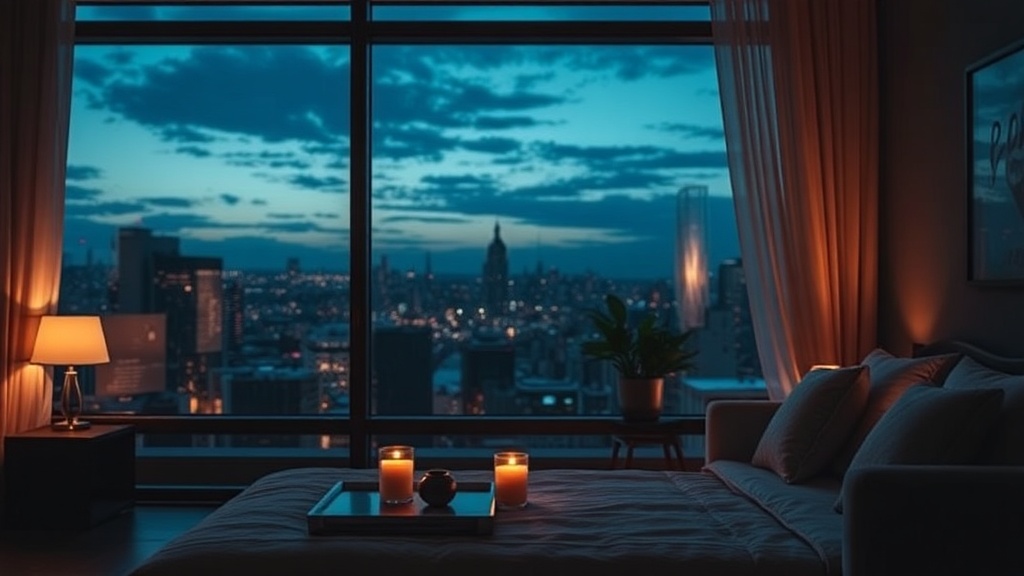
Small Sensory Shifts to Soften Your Evening Transition

The Comfort of Weighted Textures
Scented Anchors for Relaxation
Low-Frequency Soundscapes
Soft Lighting Transitions
Research from the Sleep Foundation suggests that even a single instance of bright light exposure in the evening can suppress melatonin production for hours. Most of us treat sleep as an on/off switch, but the human nervous system doesn't work that way. You can't just flip a switch and expect to go from high-stress productivity to deep slumber instantly. This post looks at how small, intentional changes to your sensory environment—specifically sight, sound, touch, and scent—can signal to your brain that the day is actually over. We'll look at practical ways to soften your transition into rest through subtle shifts in your environment.
Why Does the Transition to Sleep Take So Long?
The transition to sleep takes time because your brain needs to shift from the sympathetic nervous system (fight or flight) to the parasympathetic nervous system (rest and digest). Most people spend their final waking hours in a state of high stimulation, which keeps cortisol levels high. If you're staring at a bright laptop screen or working under harsh overhead lights, you're essentially telling your brain it's still midday.
It isn't just about being tired; it's about physiological readiness. Your body needs cues to lower its core temperature and slow its heart rate. Without these cues, you end up "tired but wired." This is where sensory shifts come in. By intentionally dimming the lights or changing the texture of your environment, you provide the biological evidence your brain needs to feel safe enough to shut down.
Visual Softening: The Power of Low-Angle Light
Light is the most potent signal for your circadian rhythm. Most modern homes are filled with blue-rich, high-intensity light that mimics the sun. To soften your evening, you need to change the angle and the color of your light sources.
- Switch to floor lamps: Instead of overhead lights, use lamps that sit low to the ground. This mimics the setting sun.
- Amber Bulbs: Swap your standard white bulbs for warm-toned LEDs or even salt lamps.
- The "Screen Sunset": If you must use a device, turn on "Night Shift" or use a blue light filter app.
I personally can't go back to harsh overhead lights after 8:00 PM. It's a rule. It makes a massive difference in how quickly I feel my eyes start to heavy. If you find your mind racing, you might also find it helpful to try a gentle brain dump to clear the mental clutter before the lights go out.
How Can I Change My Sensory Environment for Better Sleep?
You can change your sensory environment by adjusting the temperature, the sounds, and the textures in your immediate space. This is about moving from "doing" mode to "being" mode through physical sensation.
Sound is a major disruptor. While many people use white noise, sometimes the constant "hiss" can actually be irritating to a sensitive nervous system. You might find more success with "pink noise" or "brown noise," which have lower frequencies and sound more like a steady rainfall or a low rumble. Brands like Hatch make dedicated sound machines that are much more soothing than a phone app playing through a tinny speaker.
Texture and temperature are the next pillars. If your sheets are scratchy or your room is too warm, your brain stays on high alert. A common mistake is trying to sleep in a room that's too hot. You actually want your environment to be slightly cool to facilitate the natural drop in body temperature required for sleep.
| Sensory Input | High-Stimulation (Avoid) | Low-Stimulation (Adopt) |
|---|---|---|
| Sight | Bright overhead LEDs, Blue light | Warm amber lamps, Candlelight |
| Sound | Podcasts, Fast-paced music | Brown noise, Soft nature sounds |
| Touch | Synthetic, thin fabrics | Weighted blankets, Cotton, Linen |
| Temperature | Warm/Stuffy environments | Cool air, Warm extremities |
Tactile Comfort and Weight
The weight of a blanket can actually change how your body feels. Many people find relief using a weighted blanket (like those from Gravity) because the deep pressure stimulation can help calm the nervous system. It's a physical sensation of being "held," which can reduce anxiety during the transition.
Don't underestimate the power of high-quality bedding. Moving from a cheap polyester pillowcase to a silk or high-thread-count cotton one isn't just a luxury—it's a tactile cue. It tells your skin that the work day is over and the rest period has begun.
What Scents Help the Brain Relax?
Scent is the only sense with a direct line to the limbic system—the part of the brain that processes emotions and memory. This is why certain smells can instantly trigger a feeling of nostalgia or calm.
Lavender is the most famous, but it isn't the only option. Sandalwood, cedarwood, and bergamot are also excellent for grounding. The key isn't just "smelling something nice," but creating a consistent scent association. If you use a specific essential oil diffuser or a candle like Jo Malone every night at 9:00 PM, your brain will eventually associate that specific scent with the onset of sleep.
A word of caution: don't overdo it. A heavy, cloying scent can become a sensory irritant rather than a sedative. Keep it subtle. You want a hint of scent, not a room that smells like a perfume shop.
The Role of Temperature in Relaxation
If you struggle to fall asleep, you might be fighting your own biology. As mentioned earlier, your body needs to cool down to initiate sleep. This is why body scanning or other mindfulness techniques can be so effective when paired with a cool environment.
One trick I use is a warm bath about an hour before bed. It sounds counterintuitive, but the warmth brings blood to the surface of your skin. When you step out of the bath and into a cool room, your core temperature drops rapidly. This mimics the natural biological dip that signals it's time to sleep. It’s a physiological shortcut to relaxation.
Building a Sequence, Not a Checklist
The mistake most people make is treating these shifts as a chore. It shouldn't feel like another thing on your to-do list. Instead, think of it as a sequence of small, pleasurable subtractions. You are subtracting light, subtracting noise, and subtracting heat.
- 8:30 PM: Dim the overhead lights; turn on the warm lamps.
- 9:00 PM: Switch to a low-frequency soundscape (brown noise).
- 9:15 PM: Introduce a calming scent (lavender or cedar).
- 9:30 PM: Focus on tactile comfort (weighted blanket, cool sheets).
You don't have to do all of this every night. Even just one change—like switching to a lamp instead of the big light—can shift your entire evening trajectory. The goal is to create a gentle slope toward sleep, rather than a cliff.
It’s about listening to what your body is actually asking for in the moment. If you feel restless, maybe you need more weight. If your mind is buzzing, maybe you need more silence. These sensory shifts are tools, not rigid laws. Use them to find your own rhythm.